
Cloud & NFV Consulting
Joscor Consulting offers experience and insight into your organization’s cloud strategy. We are experts in planning and implementing at-scale OpenStack and NFV solutions.
Cloud Automation & Strategy
We have experience with OpenStack (Red Hat and Canonical), AWS, Azure, and more, both at the IT administrator level and at the developer and integration level. There’s nothing more daunting that trying to move production services to a new environment and manage costs at the same time. We understand the pros and cons of major cloud providers, how to automate and orchestrate application workloads and virtual infrastructure, and we have valuable experience needed to help your business avoid common cloud migration pitfalls.
Authentication Security
Modern security requires a modern way of logging in. Unfortunately, administrators and end-users are slow to break out of the horribly insecure practice of using (relatively) simple usernames and passwords to access critical systems. There are many great solutions on the market that address this exact issue and we’ve worked with a lot of them. Your service could have the strongest SSL / TLS, the most reviewed and tested code, but if your authentication scheme is weak, your entire service becomes inherently weak.
We can audit your current authentication system and, after also reviewing the level of data security needed, provide solutions ranging from Two-Factor Authentication products / services to seamless, controllable API authentication methods such as OAuth or SAML.

Defensive Programming
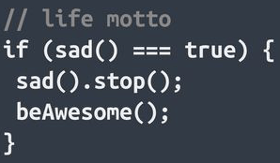
No one likes being vendor-locked due to incomprehensible code. We’re darn proud of the software and solutions we make and we write all of our code expecting others to be updating and reviewing it later.
We focus on 4 core programming values:
- Cleanliness – Code should be easy to understand and have obvious context at all times.
- Preparedness – Never underestimate users; Code for the worst.
- Exposure – All code is production-ready and continuously reviewed.
- Scalable – Code must be elastic and be able to easily grow with the business.
Security Auditing
The starting point of any security consultation is a baseline security audit. This is where we can find out how your service is built, where its weaknesses and strengths are, and how to begin forging a strategy to improve your overall information security.
Identifying potential security issues is one of the most important steps your business can take to minimize risk. If you don’t know where and how you can be attacked, you stand little chance in actually enhancing security in any meaningful way. There are plenty of tools and frameworks that can be used to “increase security” of A-Z but none of them are 100% effective nor cover all attack vectors. It’s of paramount importance to understand how you can be attacked so proper remediation can be implemented and provide real protection.

Our Blog
Integrating ServiceNow with Thycotic Secret Server
Tutorial showing how to integrate ServiceNow with Thycotic Secret Server (REST API and SOAP API) using server-side JavaScript
Intelligent cloud scaling with Cloudify
Quick and dirty tips on using Cloudify nested scaling groups and policies for better, more intelligent, service scaling.
Change default Divi template on all posts using WordPress database
After migrating a large website and setting up Elegant Theme's Divi theme, I found that all of the migrated posts had a default template set of "right sidebar". The customer was fine with there being no modification to the posts except that they did not want the right...
Fedora 24 fix – could not find or load the Qt platform plugin “xcb”
This application failed to start because it could not find or load the Qt platform plugin "xcb" This error message is because either the XCB QT5 module can't be found, or the module can't be loaded because one of its library dependencies is missing. I ran into this...
Atlassian Hipchat on Fedora 24
Since Atlassian must find it too difficult to provide instructions for any other Linux distro besides Ubuntu / Debian, I thought I'd jot down the instructions here for Red Hat based distributions. They do provide a YUM / DNF repository to use, but they fail to mention...